What Works?
What Works About Woolf Works?

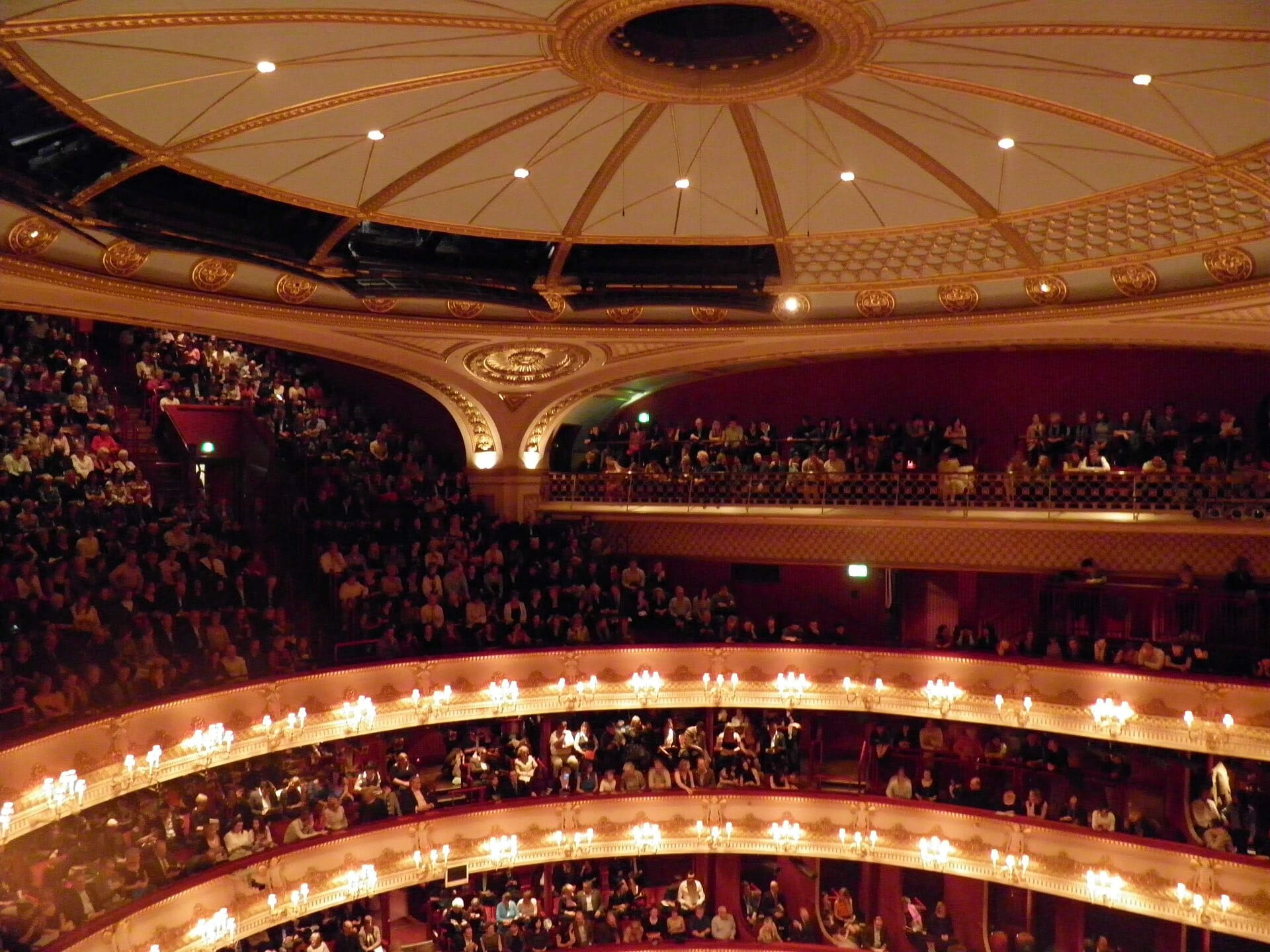
I first saw the Woolf Works ballet when it premiered at the Royal Opera House in 2015, but it would be hard to tell you what I thought at the time. I remember peering over a sea of red velvet seats and seeing a crowd of dancers flowing back and forth in pale colours. Everything was geared towards emotion. The performers were like anemones, fronds up, limbs twirling, always feeling. There were long periods when every aspect of the production seemed to be pumping the audience for a visceral response. By the time it was finished almost three hours later, the woman sitting next to me was weeping (whether from emotion or exhaustion, it was unclear), but I didn’t feel tempted to join. I had been genuinely impressed, but something in me was set against it.
I furrowed my forehead all the way home, got hold of the soundtrack by Max Richter, and listened to it repeatedly for the next five years. I wrote a lot of my first book to it. “This is Woolf-music,” I’d think to myself as I sat down to my desk, “this has something to do with Virginia Woolf.” But what exactly it had to do with Virginia Woolf, I couldn’t quite say.
Outwardly, I was effusive. I told everyone that Woolf Works was one of the best adaptations of Woolf’s writing I had ever seen. I still believe this (and if you read on, I’ll explain why) but I couldn’t express exactly what it was that ‘worked’ or, indeed, what it was that didn’t. So when The Royal Opera House announced a revival of the ballet last year, I jumped at the opportunity to get a second look. Tickets were booked for the last night of the run, and after weeks of build-up I found myself (yet again) peering over the slope of red velvet seats and fixing my critical gaze on the stage. Stupidly, I forgot to bring a notebook, but I begged a generous napkin from the bar and spent the rest of the night covering it in arcane scribbles. This, in essence, is what I saw.
We open with words – Woolf’s words on words no less. She is reading from her essay ‘Craftmanship’ for a series recorded for BBC radio in 1937. “Words, English words, are full of echoes, of memories, of associations,” she begins. Her vowels have that queenly quality that will twist a soft ‘o’ into a hard, protracted ‘uur.’ ‘Whuurds’ she trills assertively over the speakers. People are often surprised by this recording, “She’s posh!” they exclaim. Her writerly voice is so conversive we automatically imagine it’s something like our own, but her real voice is an uneasy reminder that Woolf was a separate being, foreign and unknown. But before we can allow this illuminating thought to settle, a woman in flowing silks drifts onto the stage and offers us a gentler, prettier embodiment of the writer. She is, of course, furiously composing Mrs Dalloway to the tolls of Big Ben. From now on, the dancer playing Woolf will oscillate between herself and the character of Clarissa – a lazy parallel that suggests the author and the protagonist are one and the same, but one I can forgive in light of what happens next.
The first act covers the plot of Mrs Dalloway and it is, to my mind, the finest adaptation of the novel that currently exists. It not only explores the novel’s relationships, it also explains how the structure of the narrative works. It does this using three cobalt blue rectangular frames that stand upright on the stage like a post-modern Stonehenge. Those characters locked out of the action stand inside the frames, and those dominating the action dance outside them.
First Richard and Clarissa dance as a pair, their broken synchronicity suggesting a relationship that is slightly out of step. Then Clarissa withdraws to a frame and peers through the window-like boundary as scenes from Bourton appear on the other side. We see a younger Clarissa dance with Peter, and this time there is more synergy, but their bird-like, angular movements suggest they are playing and showing off. Peter, in particular, dominates and pulls. When Clarissa and Sally dance together, there’s a genuine romance that comes from each body mirroring the other. At this moment, the Woolf-Clarissa character can’t contain herself, diving out of her frame to intercept a kiss from Sally.
These opening scenes are enough to convince the audience that the choreographer, Wayne McGregor, is an absolute master of the pas de deux. Typically, a pas de deux involves a male and female dancer depicting two characters in love, and the moves are virtuosic to show off the connection between the lovers and the skill of the dancers. I don’t know much about ballet, but I know enough to tell you that when a pas de deux kicks off, things are about to get exciting. McGregor breaks almost every rule in the pas de deux playbook except for the part about it being exciting – people are always dancing in pairs and it is always electric when they do. They are not always male and female pairings, and they aren’t always in love. In fact, sometimes they’re caught in a web of misery, like Rezia and Septimus, whose fraught relationship is so deftly summarised by Rezia coaxing Septimus into her orbit, only to watch him drift off and dance with a memory of Evans instead. Woolf only gestures to the homoerotic potential of this relationship, but when rendered through ballet it’s impossible to misinterpret. The scene is grief-stricken and physically charged; there is no doubt that the two men are deeply in love.
The next act, based on Orlando, was a more challenging experience. I mentioned that I wrote a great deal of my book to Max Richter’s soundtrack, and it was around this time I started to get flashbacks of Word documents saved under hopeful filenames like ‘Finalversion.3.’ If you’ve ever listened to Richter’s hyperactive remix of Vivaldi’s Four Seasons, you’ll know he’s capable of repeating musical phrases to the rhythm of a strobe light, resulting either in transcendental bliss or the aural equivalent of a panic attack. His compositions for Orlando belong to the latter category. It didn’t help that acid green laser beams were tracing gridlines across the audience’s heads, bringing a touch of the Berlin nightclub to the 19th century interior.
Orlando was rendered more abstractly than Mrs Dalloway, but again it was pairs of dancers that dominated. Out they came, looking like Sir Walter Raleigh meets Ridley Scott in their metallic ruffs. The music (best described as baroque electronica) kept the performers working at a violent pace, their routines involving the kind of lifts and bends usually reserved for acts at the circus. Perhaps that was the point that was being made, that we can wrestle ourselves into all kinds of shapes but there is a fundamental core that stays the same. As the act continued, the crisp lines dissolved, the clothes fell away. The music (once fragmented) began to unify triumphantly. A flood of pairs in nude leotards ripped across the stage, the crescendo arrived, and the applause was rapturous – the loudest of the entire night.
Now came the part I remembered best – the third act. I had good memories of this, notably the pale, floaty dancers personifying elements of The Waves, but it was also this part of the ballet that left me churlish and annoyed, because it was at this juncture that I was forced to return to the subject of Woolf’s life – or rather, her death.
The act begins with a tedious performance of Woolf’s suicide note to her husband being blasted over the speakers. Funnily enough, she didn’t record this for the BBC, so Gillian Anderson (AKA Dana Scully from the X-Files) had to step in instead. She reads in a softer, gentler accent to the one we heard from Woolf at the beginning. The posh, performative voice is swept away and instead we bathe in the concept of the tragic female genius. It could be Sappho, Anne Sexton, or Sylvia Plath, it doesn’t matter, the important thing is that she’s a woman who ends up killing herself. This was, after all, what we apparently came for – the greatest and most infamous of all of Woolf’s works.
In a recent lecture, Professor Michael Whitworth bemoaned the fact that popular culture presents Woolf as a victim of suicide first and a writer second. I couldn’t agree more. It’s a constant source of frustration for those of us who actually enjoy her writing that it’s so often obscured by a single biographical detail. Tennessee Williams died after choking on the cap from a bottle of eyedrops – imagine closing A Streetcar Named Desire with that image. Or think of Aeschylus, killed by an eagle who dropped a tortoise onto his head. I’d like to see a production of the Agamemnon that ends with Clytemnestra and Aegisthus entering their palace, the walls dripping with murder, while tortoises are hurled aggressively at the audience from the rigging. You can see my point.
Woolf is one of those women who people want to live (and die) through over and over again. It seemed to me that at its worst, Woolf Works was a bit of a pity party, an opportunity to tear our hearts out and bawl with surprise when we find we’ve drawn blood. On the other hand, several people involved in this production clearly knew what they were doing. The dramaturg, Uzma Hameed, writes an insightful piece in the programme to rival any scholar, and I maintain that the choreography is some of the most inspired I have ever seen. When the ‘work’ was centre stage, the level of interpretation was stratospheric. I could have filled six napkins on the first act alone. Nevertheless, as I left the crowded foyer, I wondered once again what Woolf Works really had to with Virginia Woolf. ‘Well, nothing at all,’ I thought, ‘except for the writing of course.’ On reflection, I think that’s how it should have been from the start.
Read Woolf’s essay on Craftsmanship here
I haven’t been privileged enough to see Woolf Works at the Royal Opera House (living in the North of England)but I have been privileged enough to see it at a small, local cinema with cosy arm chairs and sofas where hot drinks are served in ‘proper’ cups and saucers and a cheeky glass of red wine can be enjoyed in situ during the interval. I was immersed from the start with Darcy Bussell et al giving background and context to the ballet. For me, it evoked emotions and feelings of VW’s works which I found hypnotic. I was riveted for the whole three hours.
Thank you so much for such an interesting post. It is not quite the same but I felt rather perplexed about an exhibition I saw last year on JMC & Francesca Woodman - everyone raved about it & despite them being two of my favourite photographers, I was left feeling rather deflated. I felt they were mismatched & FW work, next to JMC, relegated her to looking as if she was a teenager doing silly selfies. They needed a bridge between them (maybe Vanessa Bell’s photos??) & it felt lazy & easy - it’s the first time I have said this to anyone as I have questioned my own judgement when everyone else was so effusive in their praise. But like you, there were some parts that were rather beautiful and I enjoyed it in part.