3 days post
Woolf on This Day, 1926

*This article contains references to suicide that some readers may find upsetting. It comes with the territory when reading Woolf, but can be avoided if necessary!*
In this diary entry from February 8th 1926, Virginia totals up her distractions and contemplates her letters. Three days worth of post are outlined here, giving us a valuable glimpse into her life at the time. Like a geologist extracting a sample from the strata of the earth, we can dig down into this bundle of envelopes to get a miniature picture of the past.
8th February 1926
Just back from Rodmell – to use again the stock opening. And I should explain why I’ve let a month slip perhaps. First, I think, the German measles or influenza; next Vita; then, disinclination for any exertion, so that I never made a book till last week. But undoubtedly this diary is established, & I sometimes look at it & wonder what on earth will be the fate of it. It is to serve the purpose of my memoirs. At 60 I am to sit down & write my life. As rough material for that masterpiece – & knowing the caprice of my own brain as record reader for I never know what will take my fancy, I here record that I come in to find the following letters waiting me. I. Ottoline, on that wonderful essay On Being Ill. She is doing a cure. 2. A long letter of hysterical flattery from Miss Keiller [Kieffer] who is translating Jacob’s Room. 3. a card, showing me her character in an unfavourable light from Miss Ethel Pye, who once met me in an omnibus & wishes to take a mask of my head; 4. a letter from Harcourt Brace enclosing cheque from the Forum for O[n]. B[eing]. Ill. 5 a letter asking me to become one of the Committee of the English Association; 6. a cutting on Hogarth Essays from the Dial; 7. a note from Clive asking me to dine to meet his brother. I think this makes me out rather specially important. It is 3 days post. I am rather tired, a little tired, from having thought too much about To the Lighthouse. Never never have I written so easily, imagined so profusely. Murry says my works won’t be read in 10 years time – Well, tonight I get a new edition of the V[oyage]. O[ut]. from Harcourt Brace – this was published 11 years ago.1
I was teaching at an event on Mrs Dalloway yesterday alongside Professor Michael Whitworth and Professor Tara Stubbs. On a Q&A panel at the end of the day, the three of us talked about how Woolf’s suicide impacts readers’ interpretations of the novel. Tara shared that some of her students assumed Clarissa kills herself at the end, a reading partly informed by Woolf’s own untimely end. Michael had just given an excellent lecture on film adaptations of the text, and argued that Cunningham’s The Hours (both the book and film) presented Woolf as a victim of suicide first and a writer second. This, we all agreed, was completely ridiculous, since Woolf had no idea that’s how her life would end.
One glance at this diary entry is enough to see what the three of us were getting at. ‘At 60 I am to sit down & write my life,’ she writes, and the diary will be ‘rough material for that masterpiece.’ This is a person who is enjoying herself enough to want to live into her dotage. She wasn’t haunted by dark fantasies of a tragic fate, she was planning yet another masterpiece in progress, the memoir to end all memoirs. What it would have been like it’s impossible to say, but I like to imagine it as having the carnivalesque qualities of Orlando combined with the ensemble structure of The Waves.
While it’s galvanising to know that Virginia wasn’t always living in the shadow of her death, her comments do make for melancholy reading. Here’s an author who is hoarding up her reflections for a later date, but who never got to use them for their intended purpose. Instead, we read them raw, a result I’m not entirely sure she would have been comfortable with. It’s true her diaries were more public than we might think (you’ll remember she passed an old diary round at Charleston for entertainment over Christmas) but it is also true she asked Leonard to burn them before she died. After reading this entry, it is difficult to argue that she saw her diaries as finished works that were ready for a wider reading public.
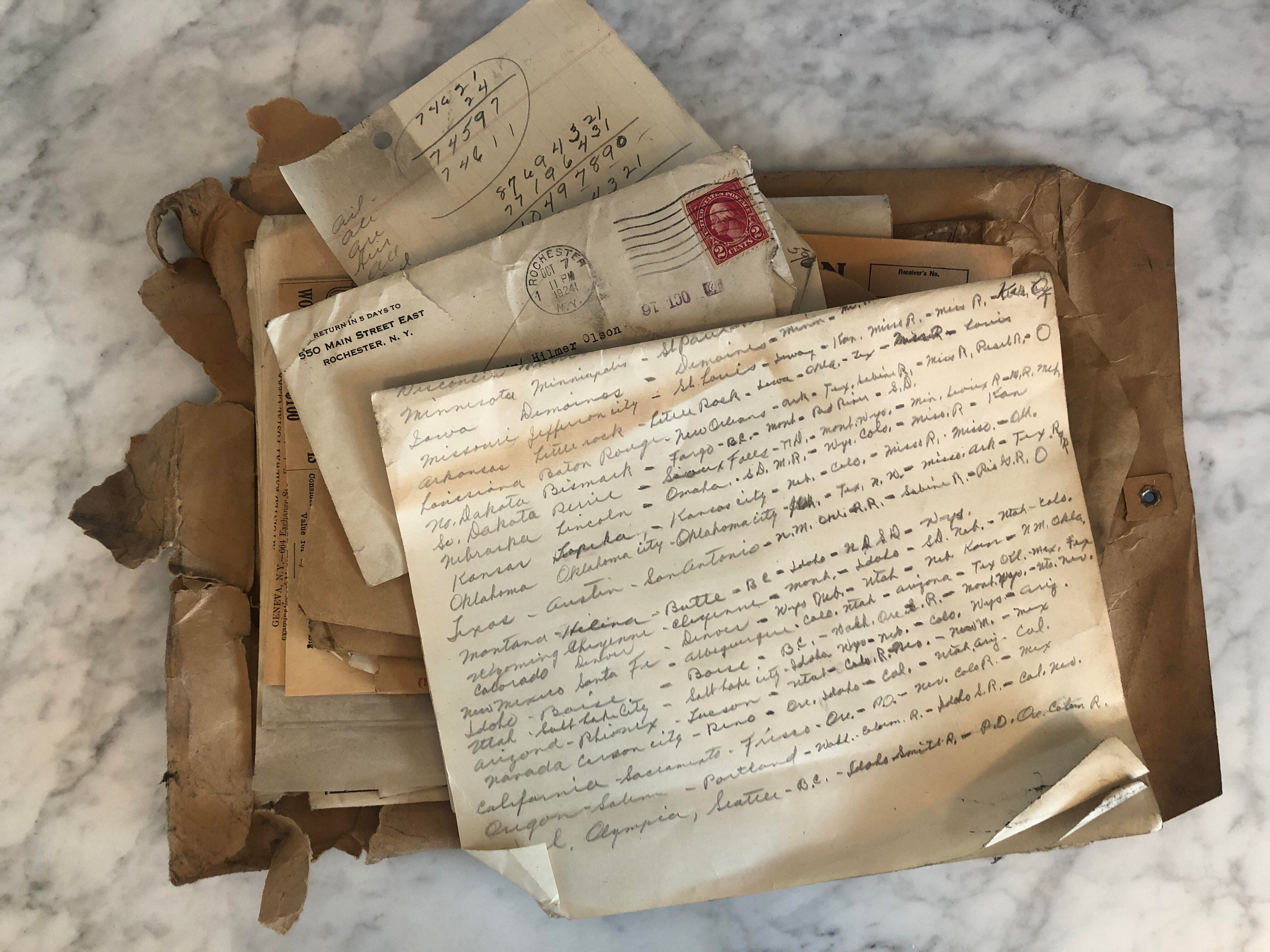
The pile of letters is a good distraction from such unhappy thoughts, and anyone who’s had a fat bundle of post (cards, not bills) will know how ‘specially important’ Virginia feels. Alongside notes from Clive Bell and Ottoline Morrell, she receives payment for a reprint of On Being Ill. The essay appeared in the New York Forum in April as ‘Illness: An Unexplored Mine,’ a title that makes it sound like the fever dream of an American gold prospector. It is the sort of title written by someone who hasn’t been ill very often, and I would be surprised if Woolf had anything to do with it
Virginia mentions Marie Kieffer, who along with and Claude Dravaine, would publish two extracts from Jacob’s Room in La Revue nouvelle in March 1927 and August 1927. Translations of Virginia’s work would continue to appear throughout the 1920s, and she would increasingly gain a global audience. The fact her prose is quite difficult to translate, goes to show how determined people like Marie were to make it widely available. Considering her growing popularity, it is strange that one of her contemporaries has publicly announced her work won’t last.
Before I move on, I should say that it’s not advisable to hold grudges, let alone against people you’ve never met. Nevertheless, I am starting to hold a grudge against Middleton Murry who was, by all accounts, rude to Virginia Woolf, dismissive of T.S. Eliot, and generally despotic with everybody else. Murry edited the Adelphi and was therefore connected to some of the important names in modernist literature, not least of all Katherine Mansfield who had the dubious privilege of being his wife. Gerri Kimber had much to say about him in our recent podcast on Mansfield, which I would highly recommend if you want to learn more.
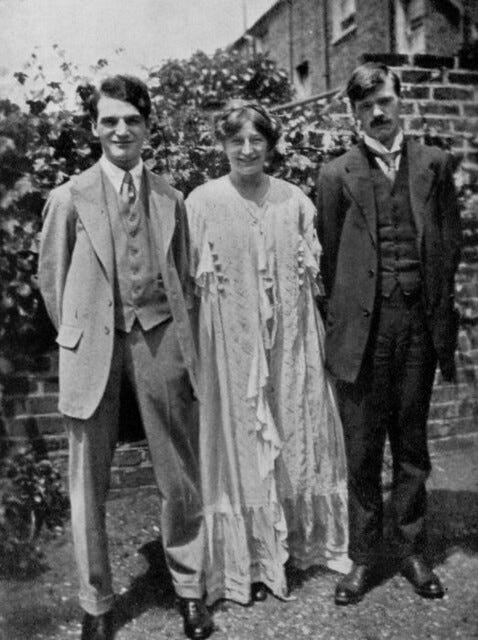
Writing in an essay called ‘The Classical Revival’ (9 Feb 1926) Murry claimed: ‘Mrs Woolf’s Jacob’s Room and Mr Eliot’s The Waste Land belong essentially to the same order. Both are failures […] Fifty, ten years hence no one will take the trouble (no small one) to read either of these works, unless there should be some revolutionary happening to their authors.’
Fortunately, Murry was wrong. Spectacularly wrong, in fact. Plenty of people still read Eliot and Woolf’s writing, and hardly anyone reads his unless (as in the case above) it is to think about the work of somebody else. If Murry had known that Virginia would become so popular that people would pore over her ‘rough material’ as well as her published novels, he’d be utterly dismayed. On days like this I feel like reading her diaries just to annoy him. Perhaps if Virginia understood this much, then she really wouldn’t mind after all.
All quotations have been copied out (errors and all!) to the best of my ability.
I really enjoyed reading this, and agree that I’ve never read Woolf in ‘the shadow’ of her suicide. Plus I really love the idea of reading her work just to annoy the ghost of a grumpy critic (who few will have heard of!).
I also have never read Woolf in ‘the shadow’ of her suicide. I read her for so many reasons including the fact that her work challenges me and slows down my reading. I will often re read sentences and passages, I have much to learn and understand. I had not heard of Murray before, some have more impact than others in the long run I guess!
I listened to this post whilst reading along during the early hours of my morning. A wonderful way to start my day.